Ready to live for less in Canoga Park by letting your property help pay the mortgage? House hacking is a smart way to do it. Your two most common paths are buying a duplex or buying a single-family home and adding an ADU. Each option can work well in the San Fernando Valley, but they play very differently on financing, timelines, permitting, and cash flow.
In this guide, you’ll learn how each strategy works in the City of Los Angeles, what lenders typically allow, how to run the numbers, and which path usually fits different goals. You’ll also get a practical checklist to de-risk your plan. Let’s dive in.
Canoga Park market lens
Canoga Park sits within Los Angeles city limits, so city rules, departments, and timelines apply. Duplex supply is limited in many Valley neighborhoods, and ADU interest has grown as state law made building easier. Rent demand, days on market, and pricing vary by block, so you’ll want fresh comps from the MLS and recent rental listings before you write offers.
Use the MLS for sales comparables and lean on current neighborhood rental listings for income estimates. For ADU cost planning, gather multiple bids from LA-based contractors who routinely build ADUs. Local experience matters more than national averages.
Duplex vs SFR + ADU basics
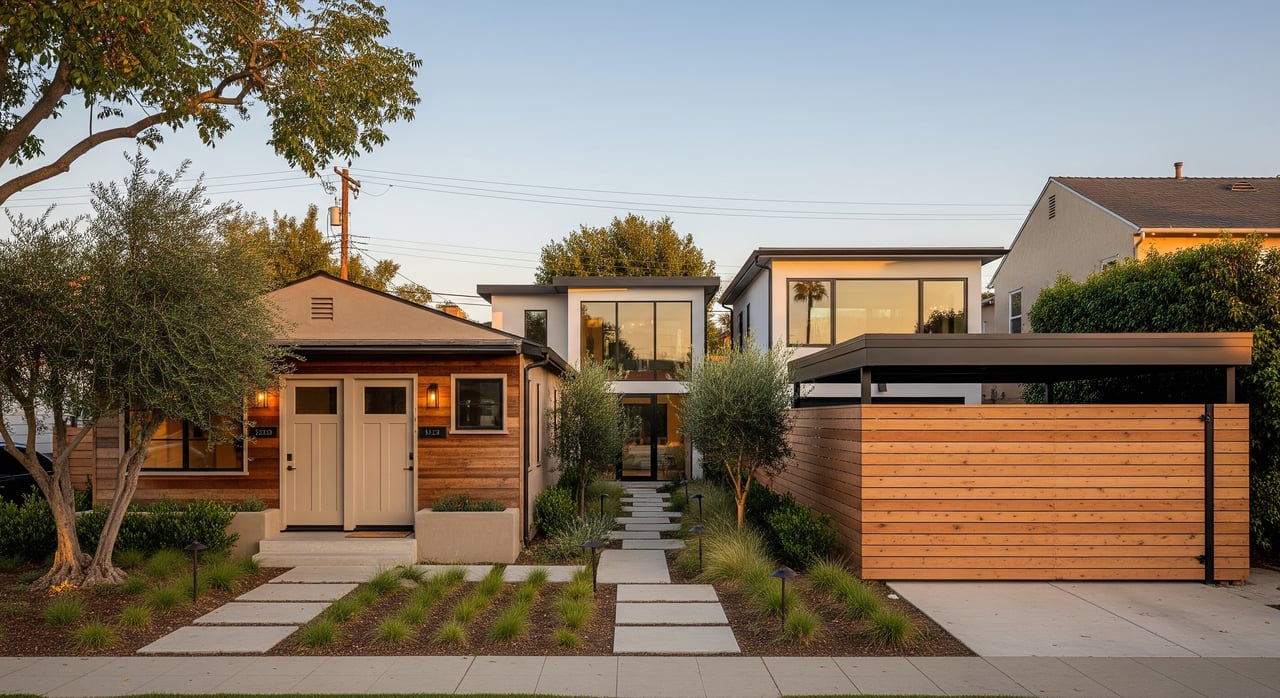
- Duplex: You buy a 2-unit property and live in one unit while renting the other. Income is typically immediate from day one if both units are rentable and one is vacant for you to occupy.
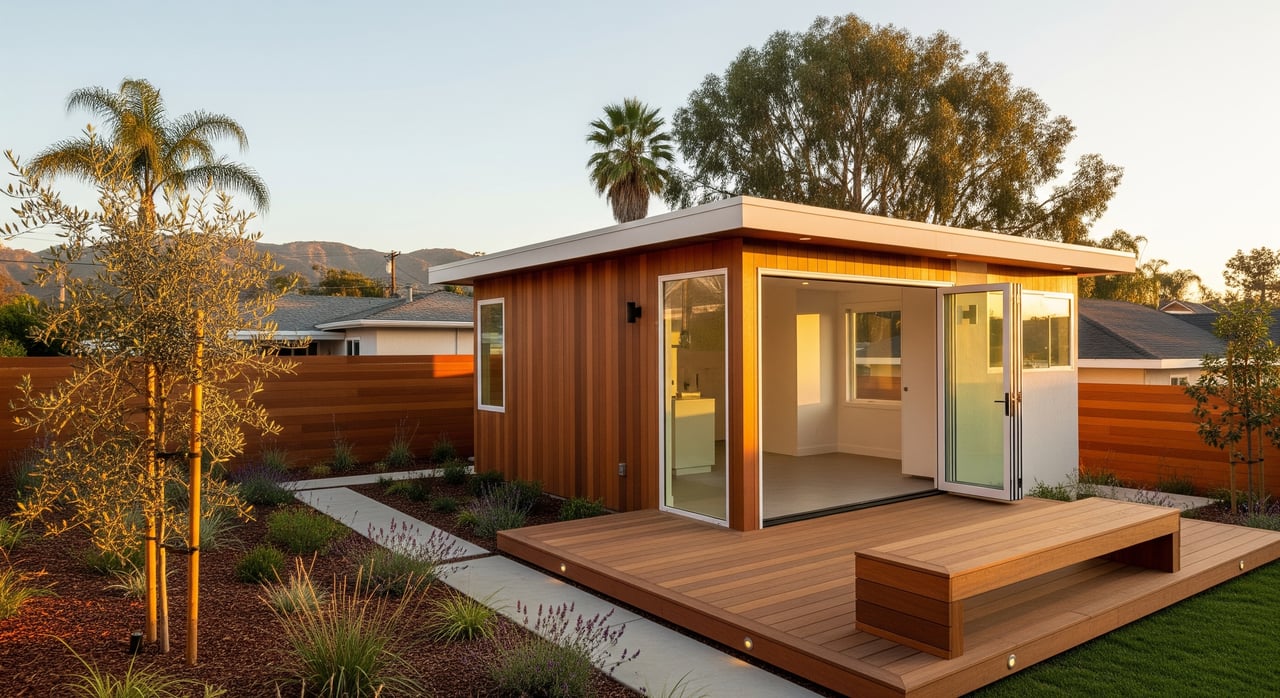
- SFR + ADU: You buy a single-family house and build an attached or detached Accessory Dwelling Unit. You live in the main home and rent the ADU.
Both strategies can offset housing costs. The duplex is usually faster to produce rent, while the SFR + ADU path gives you more control over design and long-term value but adds time and construction risk.
LA permitting and zoning essentials
Understanding Los Angeles rules upfront helps you avoid costly surprises.
Zoning and feasibility
- Check zoning, overlays, and lot specifics with the LA City Planning ZIMAS tool. It shows allowable uses, setbacks, and any special plan areas that may affect your project. Start with the ZIMAS parcel report before you write contingencies or order plans. Visit the ZIMAS portal at Los Angeles City Planning’s ZIMAS tool.
ADU rules and relief
- California law encourages ADUs and limits local barriers. Los Angeles has processes that cover setbacks, parking relief, and utility connections. Review statewide guidance at the California HCD ADU resource, then confirm site-specific details with LADBS plan check staff.
- Parking is often reduced or waived for ADUs in many cases. Still, verify your parcel’s requirements early, especially if you lack existing on-site parking.
Rent control and tenant protections
- The Los Angeles Rent Stabilization Ordinance (RSO) applies to many properties built before October 1, 1978. A covered duplex can have capped annual increases and just-cause eviction rules. Review local rules at the Los Angeles Housing Department’s RSO page and verify coverage for a specific address.
- California’s Tenant Protection Act (AB 1482) adds statewide rent caps and just-cause triggers with certain exemptions. Always verify which laws apply to your exact property and plan.
Short-term rentals
- Los Angeles restricts short-term rentals. ADUs are often not eligible for home sharing. For compliance basics, explore LA City Planning’s home sharing policy overview at Los Angeles City Planning’s home sharing page, then choose long-term rentals in your financial model.
Timelines you can expect
- Feasibility and early checks: days to weeks.
- ADU design and permit application: typically 1 to 3 months.
- Plan review and permit issuance: often several months. Total pre-construction time is frequently 3 to 9 months.
- Construction: around 3 to 9 months for many ADUs, sometimes longer depending on site and scope.
All in, an SFR + ADU plan often takes 9 to 18 months from purchase to rental income. A duplex can produce rent immediately if it is rent-ready and properly vacant for your occupancy.
Financing paths that work
Lender rules change, so confirm details with a mortgage professional who understands LA multi-unit loans and ADUs.
Duplex loans for owner-occupants
- FHA: Often allows 3.5% down on 2 to 4 units if you will occupy one unit. FHA may count a portion of rents toward qualifying. Start with FHA guidance via the HUD Single-Family resources.
- Conventional: Fannie Mae and Freddie Mac offer 2 to 4 unit loans for owner-occupants, usually with higher down payments than single-family loans and added reserves.
- VA: Eligible veterans can buy 2 to 4 units with owner occupancy. Many lenders offer competitive terms, but overlays vary.
Key lender notes for duplexes:
- Expect additional reserves and careful review of debt-to-income ratios.
- Lenders may use in-place or market rents in underwriting, subject to program rules.
- Appraisals lean on multi-unit comps and may consider income metrics like gross rent multipliers.
SFR + ADU financing
- Buy the SFR with a conventional or FHA mortgage, then finance the ADU with one of these:
- Construction-to-permanent loan that converts to a mortgage after completion.
- Renovation loans such as Fannie Mae HomeStyle Renovation or Freddie Mac CHOICERenovation, if your lender supports the scope.
- Home equity line, cash-out refinance, or a separate private construction loan followed by a refinance.
Key lender notes for ADUs:
- Some lenders count projected ADU rent only after completion and occupancy. Plan your qualifying and cash needs accordingly.
- Combined loan-to-value limits and borrowing costs determine how much of the build you can finance.
Your ROI toolkit
Before you commit, run both options through the same financial lens.
Key metrics:
- Gross Scheduled Income: total potential rent at 100 percent occupancy.
- Vacancy allowance: often 5 to 10 percent in pro formas.
- Operating expenses: taxes, insurance, repairs, landscaping, utilities you cover, and management fees.
- Net Operating Income: GSI minus vacancy minus operating expenses.
- Cap Rate: NOI divided by purchase price.
- Cash-on-Cash Return: annual pre-tax cash flow divided by total cash invested.
- Debt Service Coverage Ratio: NOI divided by annual debt service.
Quick formulas you can use:
- Cap rate = NOI ÷ purchase price.
- Cash-on-cash = (NOI − annual mortgage payments) ÷ total cash invested.
- ADU payback period = total ADU cost ÷ annual net ADU cash flow.
Example A — Duplex purchase (illustrative)
- Purchase price: $700,000 for a duplex with two 1-bed units.
- FHA loan at 3.5% down. Down payment: $24,500. Closing and initial reserves: $15,000.
- Rents: $2,000 per unit per month. Gross annual rent: $48,000.
- Vacancy at 7.5%: $3,600. Effective gross income: $44,400.
- Operating expenses at 35% of effective gross: $15,540.
- NOI: $28,860.
- Mortgage: ~$675,500 at 6.5% for 30 years is about $62,400 per year.
- Cash flow before tax: negative in this setup.
Takeaway: A duplex can get you immediate income with a low down payment. But high leverage can produce negative cash flow unless rents are stronger, prices are lower relative to rent, or you bring more cash or secure a lower rate.
Example B — SFR + ADU (illustrative)
- SFR purchase price: $650,000 with 20% down.
- ADU build cost: $200,000, financed separately.
- ADU rent: $2,200 per month. Annual rent: $26,400.
- After expenses, assume the ADU’s net contribution is about $18,000 per year.
- Additional annual debt service for the ADU build at $200,000 and 7%: roughly $15,700.
- Cash flow: slightly positive or near break-even depending on final costs and rent.
Takeaway: The SFR + ADU path often needs more upfront cash and time. The upside is design control, long-run rent potential, and possible appreciation for a permitted two-dwelling setup.
Sensitivity checks to run
- Rents ±10 to 20 percent: How does that change cash flow and payback?
- Interest rate ±1 percent: What happens to monthly and annual debt service?
- ADU cost ±20 percent: How does that shift your payback period and total equity needed?
Management, tenants, and operations
Day-to-day realities can shape which path you prefer.
Living next to your tenant
- Duplex: You share a lot or walls, which can reduce management costs and speed up repairs. You also trade some privacy.
- SFR + ADU: A detached ADU can feel more private. Plan for fair utility allocation if you do not separately meter.
Tenant laws and leases
- Confirm whether your duplex is under the RSO and how AB 1482 applies to each unit. Covered properties have just-cause rules and rent caps. Review local guidance at the LA Housing Department’s RSO page.
- Short-term rentals are tightly restricted in Los Angeles, and ADUs often cannot be used for home sharing. Long-term leases provide stability for underwriting and appraisals.
Insurance and risk
- Get landlord policy quotes that reflect your actual use, whether it is a duplex or an SFR with an ADU. Ask about endorsements for loss of rent and liability.
- Plan reserves for repairs and capital replacements. Many owners target 5 to 10 percent of gross rent as an annual reserve.
When each path fits in Canoga Park
Use your goals, budget, and timeline to choose a lane.
When a duplex makes sense
- You want income right away with low down payment options like FHA or VA.
- You are comfortable managing a multi-unit property and trading some privacy for convenience.
- The price-to-rent ratio on a specific duplex looks favorable and the appraisal has strong multi-family comps.
When an SFR + ADU makes sense
- Your lot and zoning support a permitted ADU and the build budget fits your plan.
- You want more privacy and a single-family lifestyle with supplemental income.
- Duplex inventory feels limited or is priced at a premium, and you prefer to create your own rental unit.
- You are playing the long game and can wait through permits and construction for future rent and potential appreciation.
Risk checklist for your due diligence
- Confirm zoning and ADU feasibility in ZIMAS and discuss with LADBS during pre-plan check.
- Verify rent control coverage and just-cause rules at the LA Housing Department’s RSO page.
- Gather a current rent roll and leases for any duplex and pull rental comps for the area.
- Get at least three ADU contractor bids with line-item soft costs for plans, permits, and utility connections.
- Obtain lender pre-approval that clarifies whether projected ADU rent will count for qualifying and on what terms.
- Ask about separate electric, gas, and water meters and estimated costs to add them if needed.
- Build conservative models with sensitivity tests on rent, rates, and construction costs.
Your next steps in Canoga Park
- Get pre-approved with a lender who understands owner-occupied multi-unit and ADU financing.
- Run both scenarios with today’s Canoga Park comps, lender quotes, and real ADU bids.
- Use ZIMAS to check zoning and overlays, then confirm ADU details with LADBS before removing contingencies.
- Map your timeline from design through final inspection. Plan for carrying costs during construction.
- Decide which trade-offs matter more: time-to-income and low down payment, or design control and long-term value.
If you want a local sounding board, reach out to Singh Sandhu for neighborhood guidance, on-market and off-market opportunities, and introductions to Valley lenders and ADU pros.
FAQs
How does Los Angeles rent control affect a Canoga Park duplex?
- If a duplex was built before October 1, 1978, it may be covered by LA’s RSO, which limits annual rent increases and sets just-cause eviction rules. Always verify a property’s status with the Los Angeles Housing Department.
Can I use projected ADU rent to qualify for the purchase loan?
- Some lenders allow projected rent only after the ADU is complete and occupied, while others may count a portion under specific renovation programs; ask your lender upfront how they treat ADU income.
How long does it take to permit and build an ADU in Los Angeles?
- Many projects take 9 to 18 months from purchase to rent-ready, including design, plan check, permit issuance, and construction, depending on backlog and project complexity.
Are ADUs allowed on all single-family lots in Canoga Park?
- State law broadly allows ADUs, but site-specific zoning, overlays, and lot constraints still apply; verify feasibility using ZIMAS and confirm details with LADBS before committing.
Which appraises better in the Valley: a duplex or an SFR with ADU?
- Duplex appraisals lean on multi-family income comparables, while SFR + ADU valuations depend on how the market prices permitted accessory units; local comps and appraiser treatment will drive the outcome.